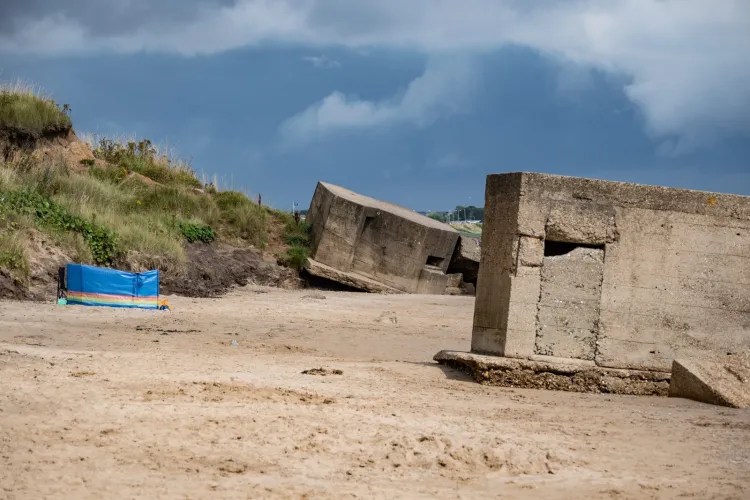
Fraisthorpe Beach: war and leisure, ruin and play
I was kindly invited by the College of Family, Couple and Systemic Psychotherapy to give the CPD session at their 2026 AGM. What follows is the text of the talk, lightly edited for the page, with the images I used on the day. Where I invited people into small groups, I have left the questions in, in case you would like to sit with them yourself.
A note before you begin. Part of this piece speaks about my father, and about the conversion therapy he underwent in the 1960s. I mention it now so that no one meets it unprepared.
The atmosphere
I want to begin by naming the atmosphere rather than the topic.
Most of us are working inside a very different climate from even a few years ago. There is more speed. More public anger. More fear of getting things wrong. More pressure to be certain, to be positioned, to be useful, to be safe.
I notice this in the wider culture, but also in professional life, in training, and in the therapy room.
So what I want to offer is not really a lecture, and not a summary of two books. It is closer to an orientation. A sense of where a long piece of thinking has arrived, and what it might ask of us as practitioners. And I know that some of you are not therapists at all. You are very welcome. Nothing I say depends on a clinical training.
The two books I will be drawing on belong together. The first, The Connected Human, gathers papers written across more than a decade. The second, The Entangled Human, is where that thinking has arrived, at least for now. I expect it to move again.
I won’t be offering you a framework to apply, nor a set of techniques to take away. What I can offer is an account of how one practitioner has tried to stay faithful to a way of thinking that begins from a simple conviction: that everything is connected, and that most of our troubles begin when we forget it. The image at the top of this page is a beach local to me, Fraisthorpe, where human defences, both modern and old, tell stories about power, control and ecology.
Where this began
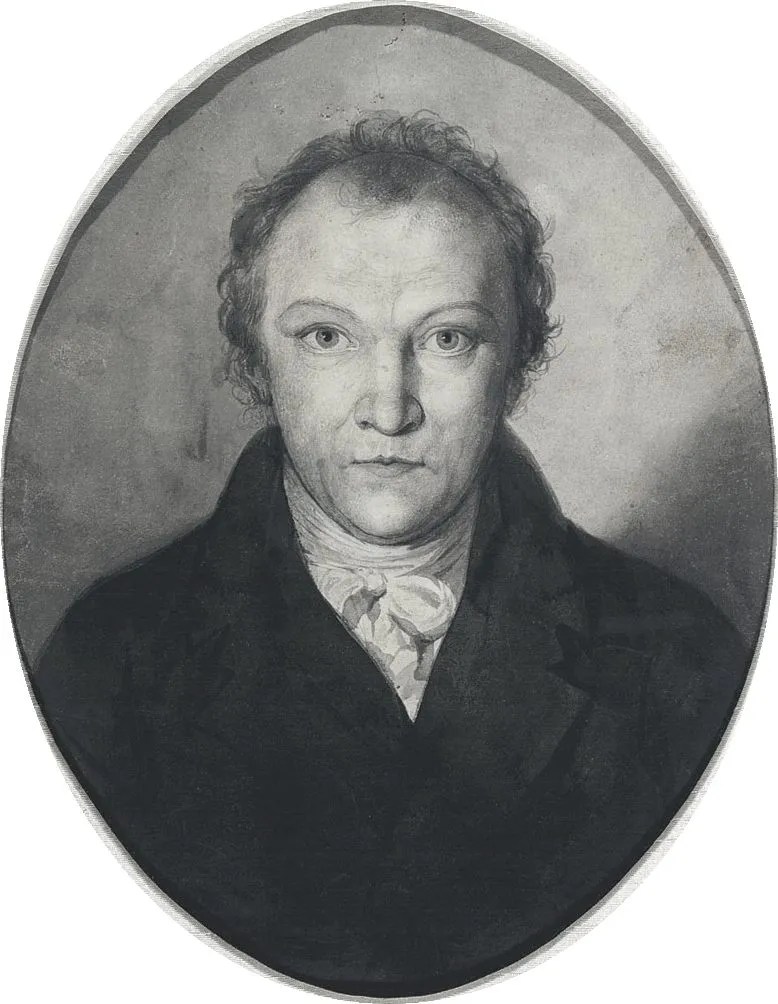
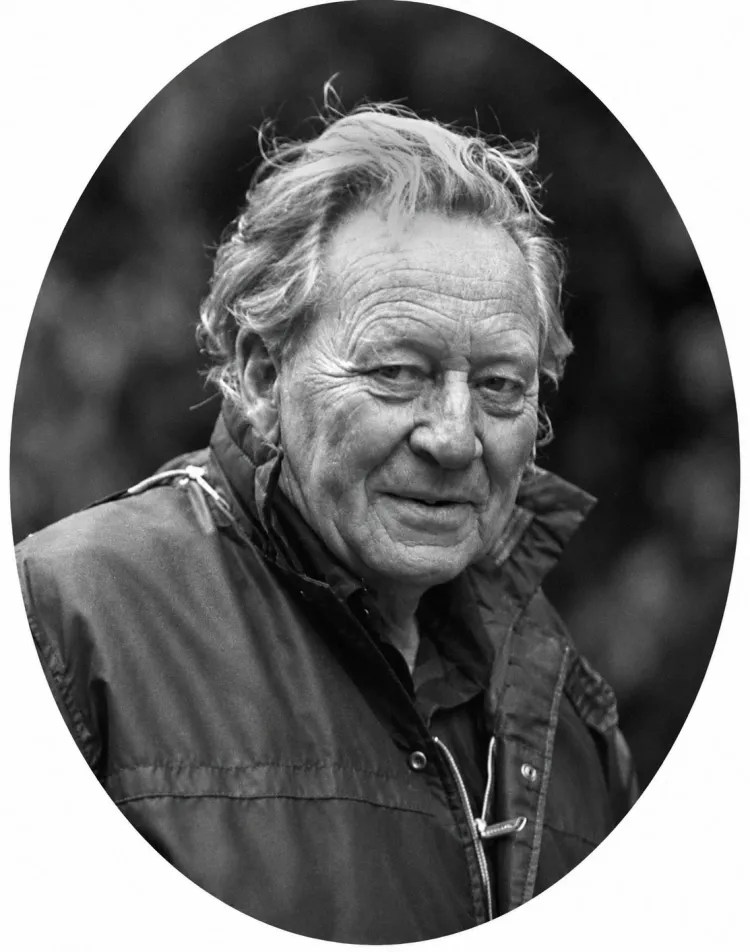
William Blake 1757–1827 Gregory Bateson 1904–1980
Two companions of a long piece of thinking, Blake and Bateson. My earliest writing came out of nursing, working with HIV and AIDS, with sexuality, with supervision. Then bereavement and family life pushed me to write in a more vulnerable and searching way.
Two companions kept returning. Gregory Bateson, warning that the major problems in the world arise from the way we think. And William Blake, railing against what he called single vision and Newton’s sleep, the shrinking of a living world into measurement and mechanism. Between them, they opened a way of thinking that was ecological, imaginative and humble.
Bateson has never been, for me, a set of ideas to apply. He has been more of a companion, one who keeps making my own confidence feel a little dangerous, pointing me back towards hesitancy.
What struck me most in his work was never the diagrams or the feedback loops, important as those are. It was something more ethical than technical. A suspicion of intervention. A concern about how easily help becomes intrusion. An insistence that we are always part of the systems we are trying to change.
I remember a family who arrived looking worn and dishevelled. It would have been easy to form quick impressions, and several agencies already had. As we talked, the shape of their lives became clearer. A man, his former partner, his current partner, and several children, one of them living with a life-limiting illness.
The two women did not particularly like one another, and there were good reasons for that. Yet they worked together, with determination, for a child they both loved. Sitting with them, I felt humbled, and a little ashamed at how quickly I too had been tempted to judge them.
It was a reminder that the deeper story in a family often reveals itself only when our attention shifts, and the noise of our assumptions begins to fade. Ray Becvar, whose textbook with Dorothy Becvar was my companion as a trainee, puts it very simply: “there are no problems floating around in space.” I’ve been conversing with Ray over the past few weeks.
That shifting of attention is where Fourfold Vision began, though I would not have called it that at the time.
Fourfold Vision: ways of noticing
I want to be careful about how I introduce this, because it is easily misunderstood.
Fourfold Vision is not a model, and it is not a ladder. For years I half-thought of it as a sequence, a movement upward toward some more refined perception. I no longer see it that way. These are not stages, and there is no mastery at the top.
They are better understood as tendencies of attention. Movements that rise and fall depending on mood, circumstance, relationship, the weather, how tired I am. Some days single vision dominates everything I see. Other days the world feels more porous.
Single Vision is the narrowing of attention onto detail. Names, ages, dates, the referral. It is necessary. It helps me arrive. It becomes dangerous only when the detail hardens into certainty and forgets it is one movement of attention among others. And, as I will come to, when it is scaled up and set loose, the same narrowing that reads a referral reads a forest as timber and a person as a problem to be corrected.
Twofold Vision is the widening into relationship, when isolated facts begin to resonate against one another and we start to see patterns rather than simply a person. The child who glances at the mother before answering; the mother whose eyes flick towards the father each time school is mentioned. A loop that holds the family’s worry in place.
Threefold Vision opens toward the imaginal. Metaphor, image, the emotional undercurrent, what wants to be said but cannot yet be spoken. Tom Andersen called this the invisible but moving part of life: the handshake rather than the hand, something we cannot see, only feel by how it touches us, and can approach only through metaphor. In a family, the mother says it feels as though they are all holding their breath.
And Fourfold Vision names those fleeting moments when the sense of separation becomes porous, when something larger than the conversation seems to hold the room. Not mystical. Ordinary. The stillness at the end of a session that nobody produced deliberately.
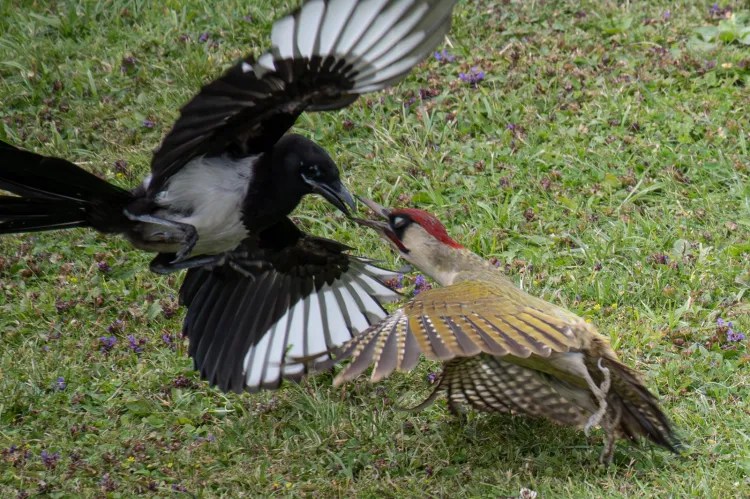
Encounter in the garden
Much of this has come to me outdoors, in the garden before the sun is fully up, watching a woodpecker outwit a magpie.

Gannets gathered on a grassy cliff edge above the sea at Bempton
On the cliffs at Bempton, waiting for the gannets, unable to force the photograph, only able to attend and let the world do the rest.
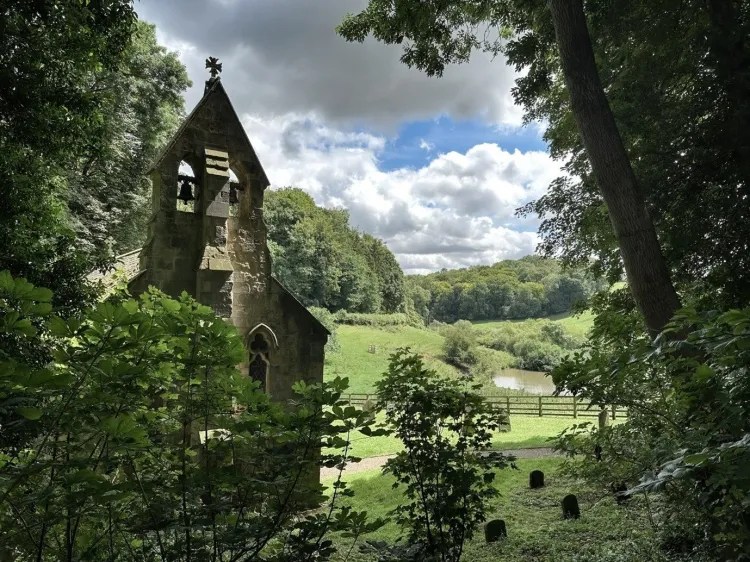
At Givendale, where my mother’s ashes were scattered, and where I feel her present in the whole valley rather than in any single marked place.
These are not illustrations of a theory. They are the ground the theory grew from.
A pause
Think of a moment from your own work when your attention widened, or when it narrowed and you noticed it narrowing. You do not need to have a name for what happened. Describe it to yourself as best you can, or share it with someone and listen to theirs.
Power, myth, and the asymmetry that is not
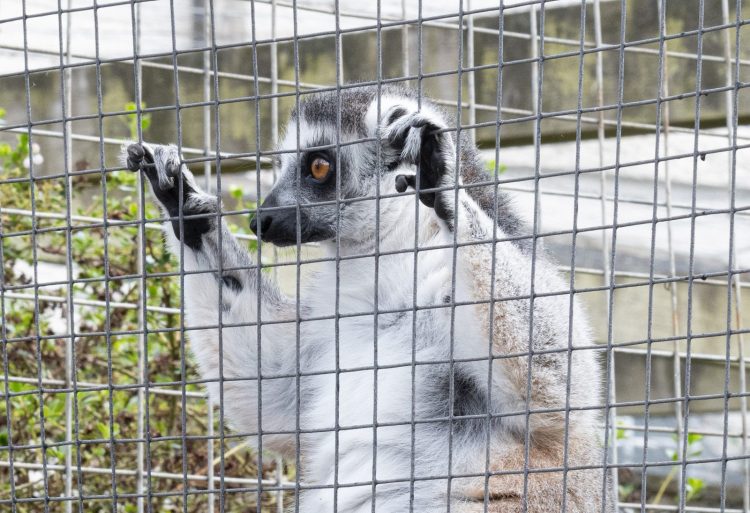
Single Vision lifts a being out of the web that gives it meaning.
Now I want to turn to the part of this work that has cost me the most, and taken the longest.
Bateson insisted that power, in human relationships, is a myth. That what we call power is better understood as a symptom of first-order thinking, a way of seeing that mistakes a pattern of relationship for a substance, a thing one person holds and another lacks.
For much of my career I have tried to defend that claim. And I still believe it is true. But it is not a comfortable thing to sit with if you have ever been on the receiving end of someone else’s certainty about what they were entitled to do to you. I have. People I love have. And countless people feel the boot of oppression far more heavily than I ever will.
So I have had to learn to hold two things at once. That the idea of power as a possession is, as Bateson said, an epistemological error, a mistake in how we know the world. And that this insight, true as I believe it to be, does not by itself tell you what to do for the person, frightened and hurt, still standing in the path of that error today. Changing how we see is necessary. It is clearly not sufficient.
What helped me, in the end, was to look more closely at nature, where power is supposed to be everywhere. The wolf does not dominate the forest; it depends on it. Remove the prey, the water, the soil, and its apparent sovereignty collapses. Its strength is a relational achievement, not an independent force.
But there is one difference between the wolf’s asymmetry and ours, and I have come to think it matters more than any other. The wolf’s standing must be renewed in every encounter. When its strength fails, its influence fails with it. In that ecology, nothing is banked. The asymmetries of the living world are perishable.
Humans learned to store asymmetry. What the wolf must renew in every encounter, humans can bank.
We found ways to convert the advantage of a moment into forms that persist and compound. Title. Property. Contract. Money. Law. A strong season becomes a granary, a granary becomes a landholding, a landholding becomes a lineage. The advantage outlives the encounter that produced it, outlives the body that won it, and arrives in the hands of people who never fought for it at all.
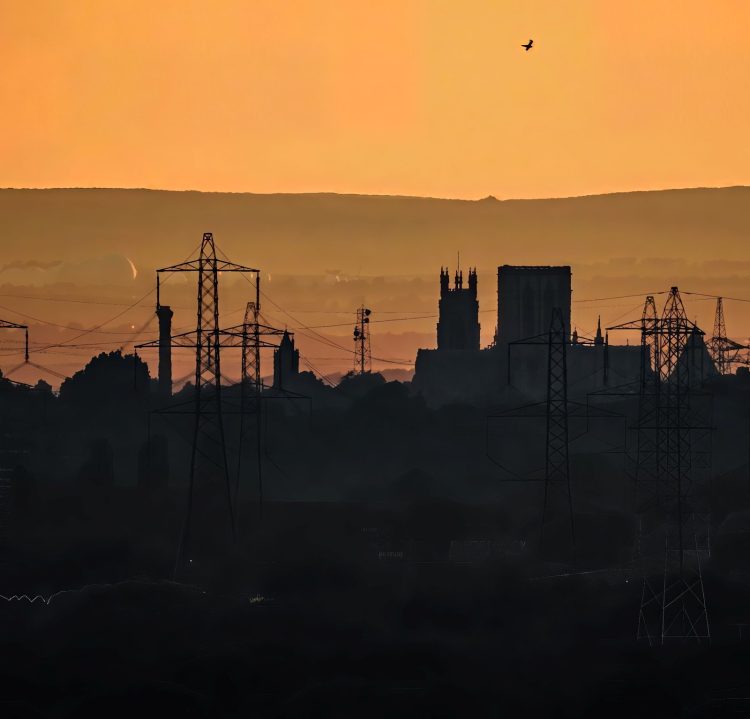
The belief in power is a myth. The asymmetry is not. From The Entangled Human
This is where I have arrived, and it is the sentence the whole of the second book turns on. The belief in power is a myth. The asymmetry is not. Bateson was right that power cannot exist in the realm of mental process, the world of pattern and relationship. But the myth did not stay there. Believed for long enough, it was built. Written into deeds and statutes, poured into borders and prisons, compounded in accounts. A myth that can be banked is no longer only a myth. It has become infrastructure, and infrastructure does not stop working when we stop believing in it.
The Jamaican writer and philosopher Sylvia Wynter presses this further, and will not let the account rest where I once left it. If the colonial way of seeing were only a mistake, it would have yielded to better information. It has had five centuries of better information. It persists because it pays, and because those it pays have defended it. Any account of power that stops at perception, including the account I spent much of my career making, risks offering the beneficiaries of that arrangement something they would very much like to have: the status of the merely mistaken.
My father’s greenhouse
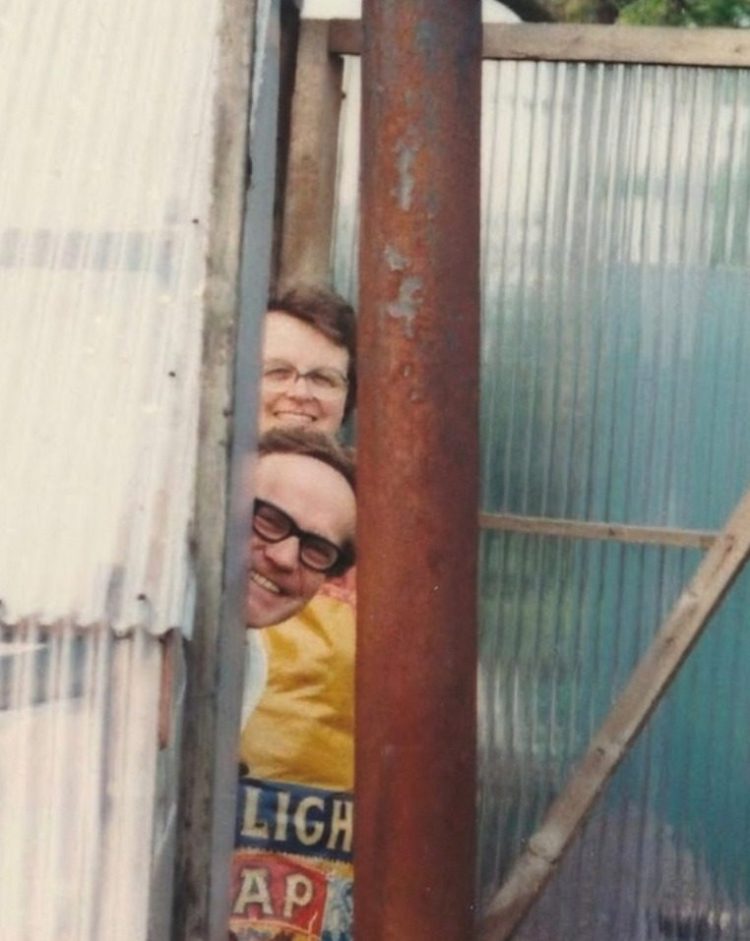
Jim and Paddy Palmer, early 1980s. The greenhouse he built with his own hands.
I want to bring this down to one life, because otherwise it stays abstract, and it was never abstract.
My father, Jim, was a nurseryman. He built a greenhouse over a hundred feet long with his own hands, timber and corrugated sheet. He was also, at various times, a hotelier, a regional chess champion, a trumpet player in a swing band. A gentle man, often preoccupied, as if some part of him were always attending to something the rest of us could not see.
In the early 1960s, when it was illegal to be who he was, he underwent conversion therapy. It was administered with the full confidence of medicine. He never spoke of it. He carried it with a quiet dignity, and a guilt that was never his to carry, for the rest of his life.
Here is the thing that has taken me most of my life to see. The aptitude that system reached in to correct was the same aptitude that built the greenhouse and found the geranium. The gentle, patient, relational noticing that could coax a hundred feet of greenhouse from timber and corrugated plastic sheets, that could recognise a small hybrid flower worth carrying forward for forty years. First-order power did not only harm him. It looked at a man made of precisely the living, tending intelligence I have spent two books trying to describe, and it saw a fault.
This is what I mean when I say the belief in power is a myth and the asymmetry is not. At the widest scale, the scale of forests and families and the whole immanent circuit of life, there is no sovereign power, only participation. That is true, and I believe it. But my father did not live at the widest scale. He lived in one body, in one country, at one moment in its history, and at that scale the asymmetry was not a myth. It reached him. It changed the shape of his life.
So I will not widen the frame here. To say that his suffering dissolves when we widen the frame would be to commit the exact error the work warns against, mistaking a truth about wholes for a truth about parts. I will let both things stand. The wide truth and the close one. Bateson was right, and it was not enough. He saw further into living systems than almost anyone, and he could not see the boot, because no boot had ever been on his neck.
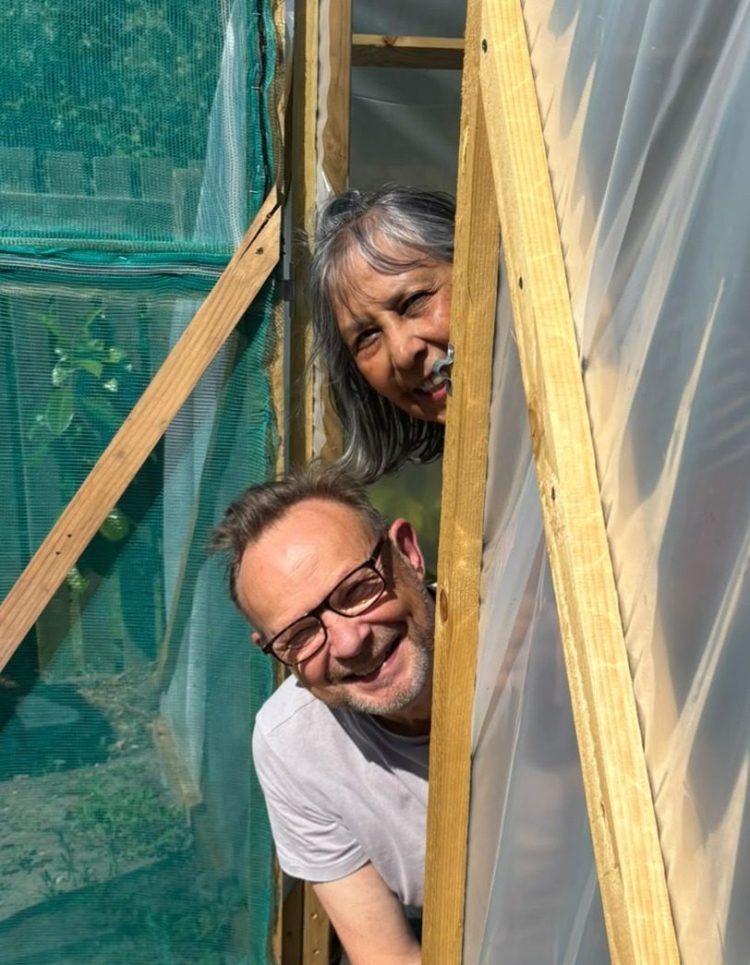
Hugh and Donna, forty years on. The same pattern, handed down without instruction.
Every spring we take a cutting from a geranium my father propagated, a small hybrid he thought worth keeping, still called Jim’s Little Gem. He has been dead for over thirty years, but the plant is alive in my hands each season. The system that judged him is gone now, discredited. The geranium is still here. That is not a resolution, and I do not offer it as one. But it is true, and it is his, and it is the one thing that certainty could neither reach nor kill.

Jim’s Little Gem
What this asks of practice
So what does any of this mean for practice, at a time when there is so much pressure to demonstrate impact, outcomes, clarity and alignment?
I am wary of offering new methods. What I am more interested in is orientation. Stance. What we lean toward when the room becomes anxious, when the system we work in becomes brittle, when we ourselves become tired.
The distinction I keep returning to is between first-order and second-order attention. First-order thinking tries to improve a system as if from outside. Second-order thinking asks how I am already shaping, and being shaped by, the system I am trying to serve. That is a far more uncomfortable question. It removes the safety of standing outside, the comfort of neutrality, and the hope that the problem sits somewhere else.
There are three small commitments I try to hold. They are not skills. They are closer to disciplines of restraint.
The first is staying a little longer with not knowing. Not as a performance of openness, but as a refusal to rush toward a story that lets me feel competent.
The second is noticing where urgency enters the room. Not only whose urgency, but what kind. What it is trying to protect. What it is trying to close down.
The third is paying attention to how easily care turns into control. How quickly support begins to shape people into the kinds of clients, families or professionals that our systems can tolerate.
None of this makes practice easier. But it does, I think, make it more honest. And perhaps more humane.
This is also where I want to say something to those who are not systemic practitioners. None of what I am describing belongs to a school or a model. The widening of attention I keep pointing to is not a specialised clinical skill. It is available at a kitchen table, on a commute, in a garden, in the pull between a screen and the person sitting beside you. If there is anything here worth taking, it is not a technique. It is a quality of attention, and a willingness to be answerable to relationship.
A second pause
Which of the three commitments (staying a little longer with not knowing, noticing where urgency enters the room, paying attention to how easily care turns into control) most speaks to something you are currently working with? What would it ask of you if you took it seriously?
The invitation
I want to close where the second book closes.
The Entangled Human is not a future possibility or a spiritual achievement. It is what we discover ourselves already to be, when the misfocusing clears, when the defended self relaxes its grip. Imperfectly. Intermittently. Again and again returning to the practice after losing it.
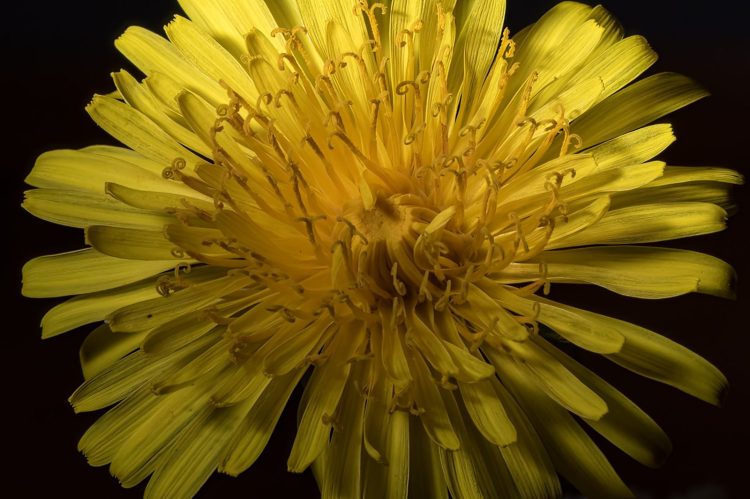
Not the same plant in every season. Reading the world and responding.
I have been watching dandelions this year. In the heat, the stalks grow long and firm, the flowers smaller. They are not the same plant in every season. They change shape and structure depending on conditions. They are reading the world and responding. There is no negotiation in it. The world presses in, and the plant responds. The asymmetry is already given, and still, it goes on.
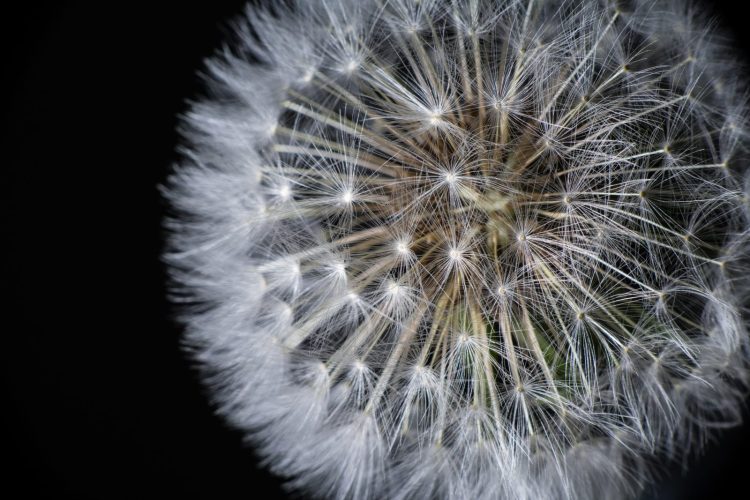
The world presses in, and the plant responds.
I have not offered you a map. I am not sure I have one.
What I have tried to offer is a sense of where a long piece of thinking has arrived, and an invitation to notice where you already find yourself entangled. Not in how clearly any of this can be repeated. But in how you experience yourselves inside the systems you are already part of.

